
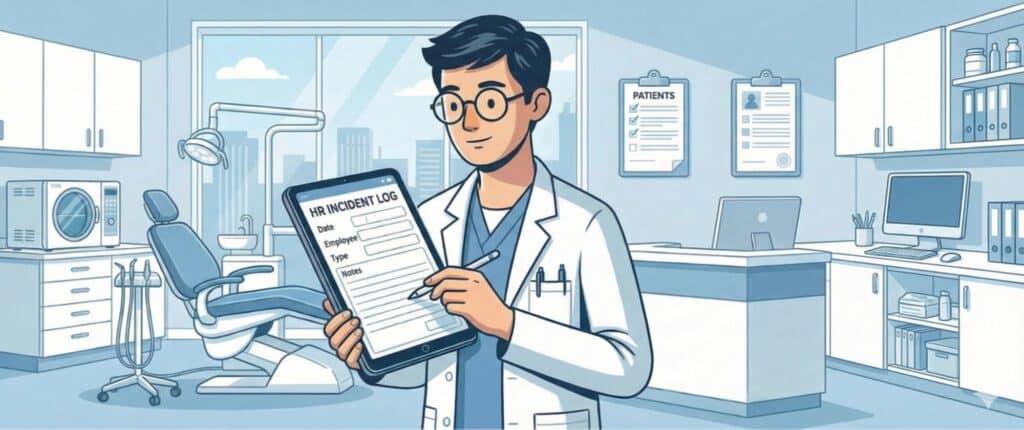
The Revolving Door: How HR Systems Protect Your Practice When “Good Help” is Hard to Find
In the current dental and broader healthcare landscape, finding and keeping quality talent is arguably the single biggest challenge for dental practice owners. The statistics are daunting: replacing a single employee can cost approximately six to nine months of their salary, not to mention the disruption to patient care and team dynamics.
With turnover rates on the rise and the definition of “quality workers” becoming increasingly elusive, you have to ask yourself what am I doing to protect my team, myself, and my practice against a highly competitive employment market? Instead of viewing HR merely as a compliance burden, view it as a strategic hedge against instability. When you accept that turnover is a persistent reality, the focus should be directed toward building an HR system that allows you to onboard talent quickly and effectively. Perhaps sometimes more importantly, identifying and removing “poor fits” without any legal blowback. The last thing you want is to feel hostage by a staff member because you aren’t ready to find that next new rockstar!
Here is how implementing robust HR systems is your practice’s safety net in a “high-turnover” employment market.
1. Speed Up the “Yes”: Automated Onboarding
When you finally find a promising candidate, you cannot afford to bog them down with administrative chaos. In today’s employee market candidates often ghost employers for faster offers, so your onboarding process needs to be seamless.
Modern HR systems allow new hires to essentially “onboard themselves” through self-guided, digital workflows. This appeals specifically to the rising Gen Z workforce, who are digital natives and expect seamless technological integration in their workplace. By automating offer letters and digitizing the “paper trail,” you ensure that:
- Compliance is immediate: Critical tax forms and policy acknowledgments are signed and stored in the cloud before the employee touches a patient.
- Standards are set early: A structured onboarding process mitigates the risks of non-compliance and safety issues, ensuring that even short-term employees understand your specific procedures from Day One.
2. Clarity Creates Accountability (or Just Cause)
The shortage of “quality” workers often manifests as behavioral issues. The biggest culprits: chronic lateness, cell phone use, or poor attitudes. The most common pain point practice owners face is attendance.
However, where many docs get caught are – you can’t fire a “bad fit” if you haven’t defined what “bad” looks like. Meaning, if an employee is late, but your handbook doesn’t explicitly define “late” or the consequences for it, you are vulnerable. HR systems and handbooks are there to clarify expectations and consequences in black and white.
A customized employee handbook serves as the “ultimate agreement” between you and your staff. It hedges against subjective frustration (“Well, I don’t like how they act”) into objective policy violations (“They violated Policy X three times”), which is the only safe grounds for termination.
If you need help setting up HR compliant systems or just need help managing teams, NEXT LEVEL CONSULTANTS are experts in providing dentist with support and tools to handle these scenarios.
3. The “Fail Fast” Strategy: Safe Termination
In a high-turnover environment, holding onto the wrong employee because you are afraid of being sued is a liability you cannot afford. When you realize a new hire isn’t the right fit, an established HR system allows you to separate quickly and legally.
To make firing safer and easier, your HR policies and system must avoid these common pitfalls:
- Document Performance Reviews: Without documented performance reviews, a termination can appear baseless to a legal outsider, inviting scrutiny.
- Use Progressive Discipline: Skipping steps in a disciplinary process (e.g., verbal warning, written warning, termination) creates disputes over fairness. A system that tracks these steps proves you made efforts to correct the behavior.
- Consistent Documentation: Consistency is your best defense. If you document a policy violation for one employee, you must do it for all. Inconsistent documentation creates the perception of bias, which undermines the validity of the termination.
4. Continuity Amidst Chaos
Finally, having a system means that when an employee leaves (whether voluntarily or involuntarily) your practice doesn’t lose its operational brain. When a long-term office manager or lead hygienist quits, they often take years of unwritten knowledge with them. This could include specific ways you’ve been handling billing, the nuances of patient interactions, and the unwritten rules of your office flow.
- Protocol as Property: By utilizing “comprehensive introduction to office protocols” during onboarding, you establish that the workflow belongs to the practice. Documenting daily responsibilities, patient care procedures, and administrative tasks ensures that a new hire can step in and operate efficiently immediately, rather than reinventing the wheel
- The Clinical Safety Net: Inadequate documentation of patient interactions is a major liability. If a termination occurs due to a clinical error or behavioral issue, but the patient interaction wasn’t documented, your defense is weak. A system that enforces documentation ensures that the “story” of patient care is preserved regardless of who is staffing the front desk or the chair.
- Cross-Training for Continuity: To prevent a total operational halt when a key employee leaves, systems should encourage cross-training (e.g., training assistants on administrative duties). This ensures that the “operational brain” is shared, covering absences and vacancies without interrupting patient care
Furthermore, keeping policies and practice IP (intellectual property) updated and compliant with federal and state laws (which change constantly, from minimum wage adjustments to leave requirements) ensure you don’t accidentally hire the next person with broken systems. By default risking new hires to wonder “what kind of practice did I just walk into?”, better continue the job search!
NEXT LEVEL CONSULTANTS dental practice management solutions advise dentists and their teams on setting up systems and policies that work for everyone. Do not wait till it’s too late to learn you are not setup the way you should be. Reach out to discuss how dental consulting can help enhance your practice!
The Bottom Line
You cannot always control the labor market, and you cannot force employees to stay. But by implementing rigid HR systems, you insulate your business revenue and reputation from the volatility of the workforce.
If you aren’t thinking proactively about these things then you will more than likely be stressed out later on. NEXT LEVEL CONSULTANTS makes implementing these things easier. So when the time comes you’re ready. Don’t get stuck and stressed out because you weren’t proactive and forward thinking.
Effective practice leaders leverage HR strategies not just for legal protection, but as a mechanism to drive profitability and retention by fostering a culture where teams thrive. By implementing comprehensive software, tools, and resources that are automated administrative burdens like onboarding and performance tracking.
Managers and Practice Owners can focus on “walking the walk” of their policies, ensuring that consistency builds trust and accountability. Additionally, utilizing specialized (resources such as leadership development programs) allows practice owners to begin balance the gap between rigid compliance and the human behavioral skills needed to engage a modern workforce.